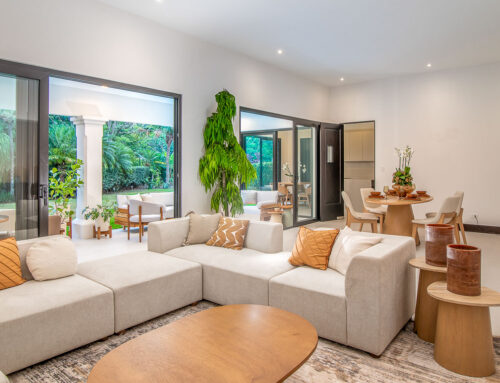

Investing in Costa Rica’s luxury real estate market is an investment in lifestyle. One that blends outdoor vitality, family intimacy, social openness, and design beauty. That shift is exactly what sits underneath the conversation between Melissa Lacayo from The Agency Costa Rica and interior design representatives Katia Ruiz from Sul Tavolo and Kevin Rojas from Roche Bobois.
Their interview taps into a fundamental truth: the best homes in Costa Rica aren’t only good looking. They’re lived in, moved through, shared, and adapted. The terrace, the dining room, and the living area are stages for routines, gatherings, and spontaneous moments. Great design anticipates this.
Let’s explore what this means in practice.
INTERVIEW: Designing for Real Life and Experience with Sul Tavolo and Roche Bobois
The New Buyer Question: “How Will I Enjoy This Space?”

Melissa frames a key pattern in today’s buyer mindset: when clients tour homes, they immediately imagine how everyday life will flow. They are not solely asking,
- “Is this beautiful?” but rather:
- Where will mornings happen?
- How will guests move between areas?
- Will this terrace feel usable year-round?
- Can the dining space shift between casual and formal?
In Costa Rica, where homes often feature large terraces, open layouts, and seamless transitions to nature, this question is even louder. A design that doesn’t support real use becomes expensive emptiness.
Takeaway: In luxury homes, function is part of elegance.
Roche Bobois’ “Dynamic Homes” and Why Costa Rica Needs Them
Kevin describes Roche Bobois’ philosophy as one rooted in accent, contrast, and nature-inspired energy. His key ideas point to a more contemporary understanding of high-end interiors:
A. Color as Movement
Costa Rican interiors tend to lean neutral: whites, creams, soft woods, and safe palettes. Kevin argues for color accents that energize space, particularly through earthy tones and aquatic hues that mirror the country’s landscapes.
Why it matters:
- Bold accents become visual anchors in open-plan areas.
- They keep minimalist spaces from feeling flat.
- They emotionally connect the home to its setting.

B. Organic Shapes to Balance Architecture

Luxury construction in Costa Rica often uses strong geometric forms: modern boxes, clean edges, and angular volumes. Kevin highlights a classic designer move: softening square architecture with organic furniture and décor.
Examples:
- Curved lounge chairs against linear windows
- Round side tables breaking hard symmetry
- Sculptural pieces echoing leaves, waves, or stone forms
C. Furniture That Invites Interaction
Rather than “museum” interiors, Roche Bobois leans into pieces that feel playful and modular. Objects that can be moved, reoriented, and enjoyed. This matches an emerging lifestyle trend: homes that feel alive, not staged.
Takeaway: Dynamic design makes a house feel like a habitat that changes with mood, season, and company.

Sul Tavolo and the Art of Hosting with Intention
Katia takes the conversation into a space that is equally important in luxury living: the ritual of gathering. Her insight is simple: before buying anything (table, dinnerware, or even a full dining concept) you must first think about life patterns.
A. Start with the Social Equation

Katia suggests doing the “math”:
- What’s your maximum number of guests?
- What is the ideal hosting scenario you want to enable?
- How do you actually use the dining space now?
In high-end homes, dining rooms are often oversized relative to daily use. Thoughtful planning prevents over-investing in formality if it never really happens.
B. Multipurpose Pieces = Long-Term Value
Katia points out something vital for modern high-end buyers: versatility is sustainable luxury. A single piece serving multiple roles is not downgrading elegance; it is upgrading usefulness.
Think:
- serving trays that double as coffee-table styling
- sculptural bowls that move between kitchen island and terrace table
- dinnerware that adapts from poolside to formal dining
Takeaway: Hosting isn’t just about having the right home. It’s about being able to activate it effortlessly.
Why These Ideas Fit Costa Rica So Well
The philosophies Kevin and Katia share feel especially aligned with Costa Rica for three reasons:

A. Indoor-Outdoor Living
Because of climate and culture, terraces are not secondary spaces here, they are core living areas. Furniture, color, and dining setups must handle:
sunlight shifts and sudden transitions from quiet to social. Design that respects real climate usage is what makes luxury last.
B. Nature as the Centerpiece
Costa Rica doesn’t need interiors to compete with scenery. The best design works with the view:
- accent colors that echo greenery or ocean
- organic shapes that soften the boundary between built and natural
- materials that feel tactile and grounded
C. A Growing Desire for Bold Personal Expression
Melissa makes a sharp observation: many local homes stay conservative in palette. But clients increasingly want spaces that feel personal, curated, and expressive. Brands like Roche Bobois and Sul Tavolo reflect that evolution.

What this interview ultimately highlights is a modern truth about high-end real estate: a luxury home is only as successful as the life it supports.
Roche Bobois brings vibrancy, organic movement, and a playful relationship with nature. Sul Tavolo brings the intelligence of planning and the beauty of hospitality. Melissa bridges both worlds with the buyer’s central concern: “Will this space truly work for me?”
When design and real estate align like this, properties start becoming platforms for experience: the highest form of luxury there is.